.png)
What Is DeBank?
DeBank is known for its Web3 portfolio-tracking experience, with tools for viewing digital-asset balances and decentralized-finance positions associated with a wallet. Instead of opening each protocol separately, users can use a consolidated view to better understand the on-chain footprint connected to an address.
The platform also includes social features, making wallet addresses and Web3 IDs easier to discover. This combination of portfolio information and community tools gives users a broader view of activity across Web3.
Portfolio Tracking Across Web3
A wallet can interact with multiple networks and DeFi applications. DeBank’s portfolio interface is designed to organize supported asset balances and protocol positions in one place, helping users inspect their on-chain holdings without manually collecting details from separate dashboards.
Wallet Overview
Review available portfolio information associated with a public wallet address.
Protocol Positions
Inspect supported DeFi positions and related asset information.
Asset Changes
Eligible features can help compare portfolio changes over time.
Transaction History
Use transaction summaries and filtering tools to examine wallet activity.
Search Wallet Addresses and Web3 IDs
DeBank supports searching for a wallet address or Web3 ID, making it easier to find a profile and inspect publicly available on-chain information. A wallet address can provide a starting point for exploring token balances, supported protocol positions and activity associated with that address.
Blockchain data is public by design, but a displayed wallet profile should not automatically be treated as proof of a person’s real-world identity.
DeBank’s Web3 Social Community
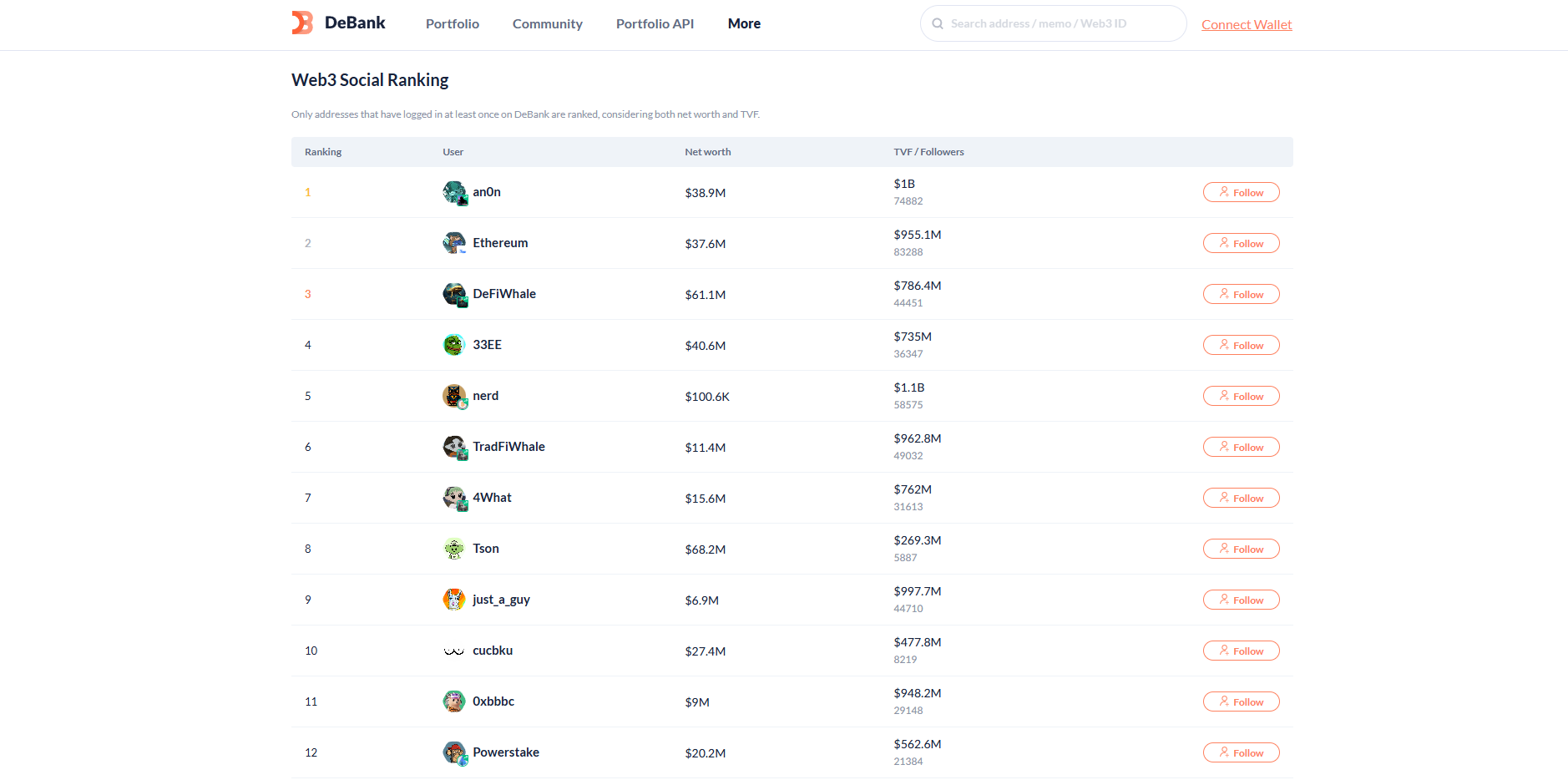
DeBank extends beyond portfolio tracking with social discovery features. Users can explore profiles, follow accounts and view community posts. This creates a way to keep up with builders, researchers, traders and other participants through their Web3 presence.
Stream and Posts
The Stream experience lets community members share ideas and commentary related to Web3. As with any social platform, users should assess claims independently and distinguish personal opinions from verified project information.
Quests and Community Activity
DeBank has also featured quests and other engagement-oriented activities. Availability and participation requirements can change, so check the current platform interface for active options.
DeBank XP, Credit and Web3 Badges
DeBank’s official product pages describe community and identity features including DeBank XP, Credit and Web3 Badges. These are designed to reflect platform participation, user activity or achievements associated with Web3 addresses.
DeBank XP
XP has been described as a way to track engagement from activities such as referrals, quests and community interactions. Future rewards or redemption terms should be checked against official announcements rather than assumed.
Credit and Web3 Badges
Credit is presented as a framework for assessing aspects of a Web3 user’s authenticity and activity. Web3 Badges can represent achievements associated with an address and may be viewable or mintable when supported.
Additional Portfolio Tools
DeBank lists extra tools for users who want more ways to inspect wallet history and profile information. Some capabilities are associated with VIP or paid features, and the available package can change over time.
Time Machine
Compare portfolio information between selected dates where available.
Change View
Review changes in an address’s portfolio over a selected period.
Transaction Analysis
Use summaries and filters to make transaction activity easier to inspect.
Profile Customization
Eligible profile options can include custom avatars and cover images.
DeBank Cloud and Developer Data
DeBank Cloud provides developer-facing APIs for accessing supported Web3 data. Its documentation describes endpoints for user balances, token holdings, protocol positions, chain usage and social relationships. Developers can use these data services to build applications that present on-chain information in their own interfaces.
API access, authentication, rate limits and feature availability depend on the relevant service and access plan. Developers should consult the current documentation before integrating an endpoint.
How DeBank Fits Into a Web3 Workflow
A common workflow begins by searching a public wallet address or Web3 ID. The user can then review available portfolio details, explore supported protocol positions, inspect transaction activity and follow profiles of interest. Developers may also use documented data services to incorporate portfolio information into other tools.
DeBank is primarily an information and community interface; the details shown depend on supported networks, indexed protocols and features available to the user. Review transactions carefully in the wallet or application that will execute them.
Frequently Asked Questions
What is DeBank used for?
It is used to explore Web3 portfolios, review supported DeFi positions, search wallet addresses and discover community profiles.
Can I search a wallet without a Web3 ID?
The platform supports searching by wallet address and also provides search for Web3 IDs and related identifiers.
Does DeBank include social features?
Yes. DeBank includes profiles, following and posts alongside portfolio tools.
Are all features free?
Not necessarily. DeBank lists VIP or paid features for some tools. Check the current product page for availability and pricing.
Does DeBank control assets shown in a portfolio?
Portfolio tracking displays information about supported on-chain holdings and positions; it should not be confused with custody of those assets.
Conclusion
DeBank brings together Web3 portfolio tracking, wallet discovery, transaction analysis and social features. Its portfolio views help organize information from supported chains and protocols, while its community tools make it easier to explore Web3 profiles and ideas. For the latest feature details, supported data and access options, refer to DeBank’s current official product and developer materials.